
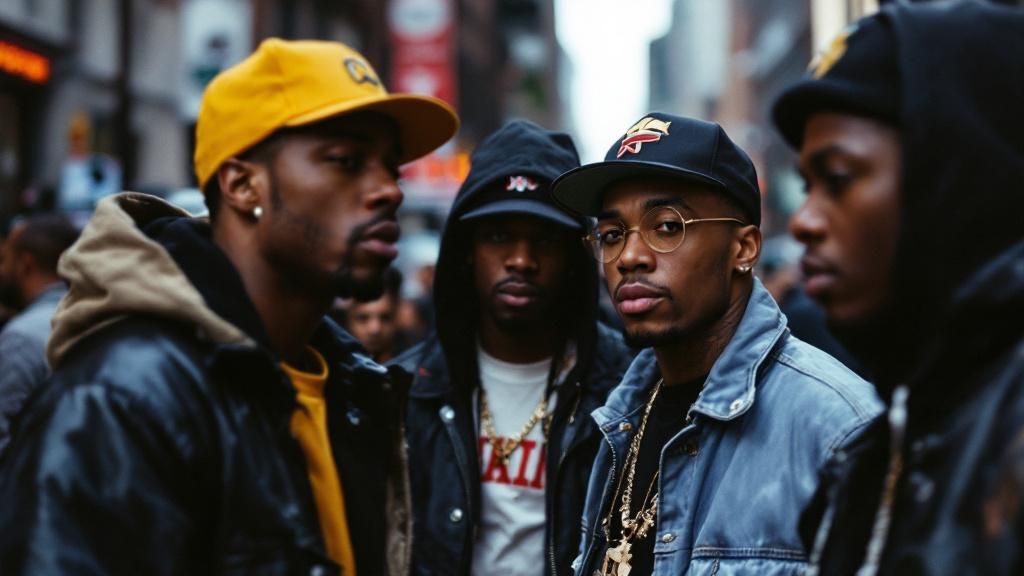
Photographer Eddie Otchere has documented some of hip-hop’s most iconic moments through his lens during the genre’s peak period, a period enshrined in his new book Wu-Tang Clan 1994-2004, published by Café Royal Books. From his first chaotic encounter with Wu-Tang at London’s Kentish Town Forum in 1994—when the group were hurling stones at moving trains instead of attending sound check—to unreleased images of Jay-Z, Snoop Dogg and Black Star, Otchere’s archive documents the visceral power and unpredictability that shaped hip-hop in the 1990s. His photographs reveal not just the polished personas of rap’s major figures, but the candid instances that seized the genre at its most vibrant and unpredictable.
A Decade of Encounters with Wu-Tang Clan
Eddie Otchere’s connection to Wu-Tang Clan extended over a remarkable ten years, yielding many of the striking photographs of the legendary group. His initial encounter with the ensemble in 1994 set the tone for all future interactions—unexpected, vibrant and completely genuine. Instead of adhering to the rigid standards of studio photography work, Wu-Tang’s musicians exemplified the raw spontaneity that Otchere aimed to document. Each meeting offered fresh challenges and unforeseen occurrences, turning standard jobs into unforgettable moments that would define his record of the most influential hip-hop collective.
Over the course of the decade, Otchere’s efforts to capture individual members proved equally eventful. His second encounter, whilst working for Mixmag in a studio environment, saw him splitting studio time with Time Out magazine. Despite his aspirations to finish his Wu-Tang collection, RZA’s absence left the session unfinished. A subsequent meeting with RZA in “full Bobby Digital mode” presented different obstacles, as the producer’s conceptual persona obscured the visual identity Otchere sought. These encounters, whether successful or thwarted, together created a picture of Wu-Tang’s mysterious character.
- First meeting: 1994 Kentish Town Forum, guitars and locomotives
- Second session: Mixmag studio shoot, RZA unexpectedly absent
- Third encounter: RZA in Bobby Digital artistic persona mode
- Los Angeles meeting: RZA’s attendance at Melrose block party
The Kentish Town Forum Meetings
The September 1994 encounter at London’s Kentish Town Forum demonstrated Wu-Tang’s disregard for convention. Meant to be a sound check, the group instead occupied themselves hurling stones at passing trains—a detail that precisely captured their rebellious nature. Otchere’s image of Method Man, shot behind the venue, captures this turbulent instant with impressive sharpness. Shot on 2 September 1994, the portrait reveals an artist in his element, unmoved by the disrupted itinerary and absorbed in the present moment.
This unpredictability ultimately benefited Otchere’s artistic perspective. Rather than creating polished studio shots, he recorded Wu-Tang as they truly appeared—irreverent, unscripted and utterly resistant to adhering to commercial standards. The Kentish Town Forum events gained legendary status within Otchere’s collection, constituting a turning point when hip-hop’s most transformative group was still working outside industry boundaries. These images capture not merely the subjects’ physical forms, but the fundamental spirit that made Wu-Tang transformative.
Hidden Recordings from Hip-Hop’s Premier Names
Otchere’s archive extends well beyond the Wu-Tang Clan, encompassing a impressive array of unreleased photos chronicling hip-hop’s most influential figures. These images, most of which remained unpublished, deliver candid insights into the lives of artists who defined the direction of hip-hop during its peak creative years. Ranging across spontaneous backstage instances and deliberately staged studio recordings, Otchere’s lens documented a rawness mainstream media typically missed. His work preserves a pantheon of hip-hop legends in their unrehearsed scenes, showing personalities distinct from their carefully constructed identities and meticulously crafted presentations.
Among these prized pieces are meetings featuring Jay-Z, Snoop Dogg, and Black Star, each moment displaying distinct facets of hip-hop’s cultural sphere in the late nineties era. A 1996 picture of Jay-Z, captured outside the iconic Bomb the System store on West Broadway, shows the artist in his prime amid New York’s lively street culture. Similarly, an unreleased photograph from Snoop Dogg’s December nineteen ninety-six Manchester show reveals a deeper perspective of the West Coast legend. These unpublished works jointly represent an precious archive, capturing the genre’s most transformative decade through a photographer’s astute vision.
| Artist or Event | Year and Location |
|---|---|
| Jay-Z | 1996, West Broadway, New York |
| Snoop Dogg | 2 December 1996, Manchester |
| Black Star (Yasiin Bey and Talib Kweli) | 1998, Midtown Manhattan |
| Mariah Carey | 8 December 1995, Piccadilly Circus, London |
| Cappadonna | Various, Brixton |
| RZA (Bobby Digital era) | Various, Studio and Los Angeles |
Stories Captured in the Frames
The circumstances encompassing these photographs often proved as engaging as the photographs themselves. Otchere’s 1996 encounter with Jay-Z illustrated the natural character of his style. Initially planned to convene at the venue, the shoot moved to the exterior of Bomb the System, resulting in an authenticity that studio environments rarely achieved. Likewise, his 1996 December Manchester shoot with Snoop Dogg generated both released and unreleased frames, with the artist generously introducing Otchere to his dad, producing a poignant two-generation image that documented various generations of hip-hop influence.
Each unpublished photograph represents a moment where circumstances, timing, or editorial decisions limited wider circulation, yet the images maintain their cultural importance and creative value. Otchere’s meticulous documentation of these encounters demonstrates a photographer deeply committed to capturing hip-hop’s cultural essence rather than merely documenting celebrity. These frames, whether published or consigned to archives, together illustrate his unique position as a cultural chronicler documenting hip-hop’s golden age with remarkable entrée and creative authenticity.
The Disorder and Unpredictability of Hip-Hop Culture
Eddie Otchere’s first meeting with Wu-Tang Clan in 1994 perfectly captures the unpredictable energy that defined hip-hop’s peak era. Rather than conducting a conventional sound check before their Kentish Town Forum show, the group threw rocks at passing trains—a moment that might have frustrated a less flexible photographer but instead came to represent their untamed, boundless energy. Otchere’s capacity to adapt and capture Method Man’s portrait behind the venue, whilst disorder erupted around him, illustrates how the genre’s most iconic images often arose out of improvisation rather than careful preparation. This willingness to embrace disorder rather than impose rigid structure allowed him to capture hip-hop in its authentic form.
The unpredictability extended beyond Wu-Tang’s antics. When scheduled to photograph RZA for a Mixmag cover story, Otchere found himself sharing studio time with Time Out magazine, only to have his subject fail to appear entirely. On subsequent encounters, RZA appeared in full Bobby Digital persona, his identity intentionally concealed by conceptual artifice. These disruptions and transformations embodied hip-hop’s broader ethos—a culture that resisted conventional celebrity protocols and championed reinvention. Otchere’s archive captures not just the artists themselves, but the tension between what was expected and what actually happened that defined the genre’s most vibrant period, proving that the best photographs often came about through failed arrangements.
- Wu-Tang throwing rocks at trains instead of showing up for sound checks
- Jay-Z session moved from studio to street outside Bomb the System store
- RZA’s absence from scheduled Mixmag shoot with Time Out magazine
- Snoop Dogg bringing his father during Manchester arena photography session
- RZA in Bobby Digital mode intentionally concealing his recognisable identity
From Manchester to Los Angeles: A Comprehensive Record
Otchere’s archive goes considerably further than London’s music venues, capturing hip-hop’s international reach throughout the genre’s peak expansion phase. His December 1996 encounter with Snoop Dogg at Manchester’s Nynex Arena delivered a remarkably moving unpublished frame—one depicting Snoop presenting his father to the photographer. Whilst Mixmag featured a double portrait of both men, this alternative image stayed out of public view for decades, demonstrating how Otchere’s most compelling work often remained within the margins of editorial decisions. These provincial British venues became unlikely stages for recording prominent American hip-hop figures, illustrating the genre’s universal appeal and the photographer’s dedication to pursuing the music wherever it went.
The odyssey culminated in Los Angeles, where Otchere’s final Wu-Tang encounter unfolded in a car park on Melrose Avenue during a block party he was organising. Rather than a controlled studio session, RZA spent the entire evening holding court, embodying the collaborative spirit that had defined his production output throughout the 1990s. This Los Angeles gathering represented the full circle of Otchere’s hip-hop chronicle—from chaotic London sound checks to West Coast street parties where the music’s architects gathered informally. These varied venues, connected by Otchere’s lens, reveal how hip-hop surpassed geographical boundaries, creating a global community united by artistic innovation and cultural resonance.
Global Moments and Noteworthy Experiences
Beyond Wu-Tang’s expansive saga, Otchere recorded other significant figures during international assignments. His 1998 shoot with Black Star—Brooklyn rappers Yasiin Bey and Talib Kweli—took him to midtown Manhattan for promotional imagery following their Brooklyn album cover session. This deliberate location shift demonstrated how photographers carefully chose settings to showcase different aspects of an artist’s identity and aesthetic. Similarly, his 1996 Jay-Z session began with arrangements at the Soho Grand hotel before unexpectedly moving to West Broadway’s Bomb the System store, converting a conventional studio portrait into street-level documentation that better conveyed the artist’s raw authenticity and urban roots.
These worldwide and intercontinental sessions reveal Otchere’s flexible approach—his openness to forgoing predetermined locations when conditions required it. Whether in Manchester’s venues, Manhattan’s streets, or Los Angeles parking facilities, he remained sensitive to the moment’s intensity rather than strictly following logistical planning. This adaptability enabled him to capture hip-hop’s essence authentically, capturing not merely the artists’ looks but their settings, their associates, and the improvised moments that defined their personalities. His worldwide collection thus represents hip-hop’s growth from American origins into a genuinely worldwide cultural phenomenon.
Heritage of an Age Preserved in Silverware
Eddie Otchere’s visual archive represents far more than a collection of celebrity portraits; it serves as a vital historical record of hip-hop’s most transformative decade. His shots covering 1994 to the early 2000s chronicle an time when the genre was establishing its artistic legitimacy and commercial dominance, with Wu-Tang Clan spearheading innovation. The unpublished shots—including those of Jay-Z, Snoop Dogg, and Mariah Carey—showcase the candid, unguarded moments that official publications often obscured. By documenting artists in transit, between scheduled commitments, and in unplanned moments, Otchere maintained the authentic texture of hip-hop culture during its heyday, creating a photographic story that complements the era’s classic records.
The publication of Wu-Tang Clan 1994-2004 through Café Royal Books finally grants these images their rightful prominence, offering contemporary audiences an behind-the-scenes view on one of the most influential hip-hop collectives. Otchere’s willingness to embrace chaos—whether Wu-Tang members threw rocks at trains during sound checks or sessions relocated unexpectedly to street corners—illustrates his commitment to authenticity over perfection. These photographs collectively testify to the cultural importance of hip-hop during the 1990s, documenting not just the creators of the music but the creative energy, spontaneity, and global influence that defined the most celebrated period of the period.
